
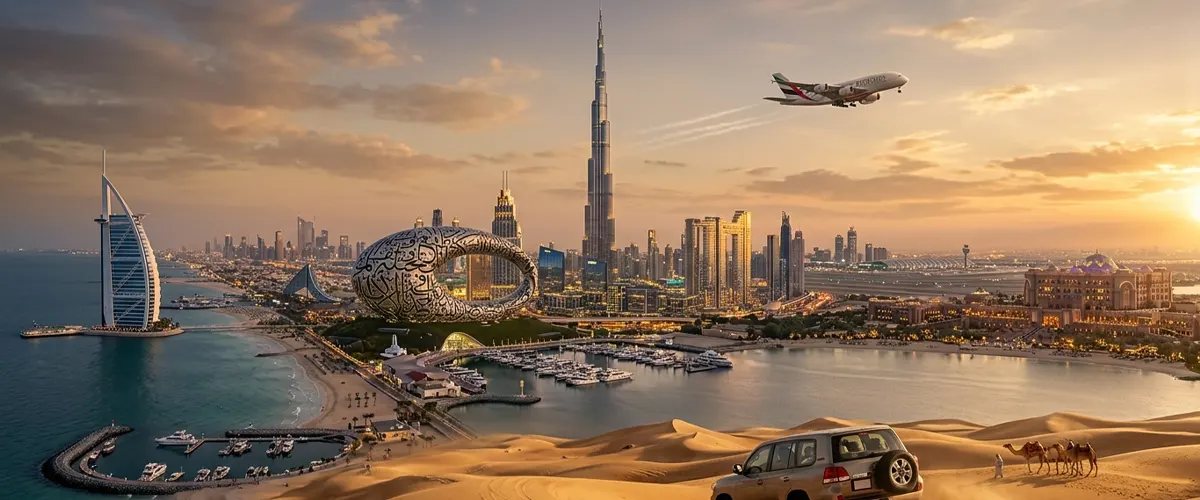
Tourism marketing trends in UAE are rewriting what it means to compete for global visitors. The market is not slowing down. It is accelerating.
While many regions struggle with conflict, instability, and declining tourist confidence, the UAE stands apart. The world is watching a region navigating turbulence. Yet the UAE continues to welcome millions of visitors, post record-breaking numbers, and earn global recognition for safety and stability.
Dubai welcomed 18.72 million international overnight visitors in 2024. In the first quarter of 2025, the city pulled in 5.31 million international tourists, a 3 percent rise year on year. Tourism contributes AED 236 billion to the UAE economy. That is around 12% of GDP.
For business owners, this is a clear signal. The opportunity in tourism marketing in UAE is enormous. But the rules of the game have changed. And safety has become the most powerful marketing message the UAE has ever had.
Why UAE Tourism Marketing Is Changing Fast
A few years ago, a nice website and some social media posts were enough to compete. Not anymore.
Today, UAE tourism marketing is driven by three powerful forces:
- Data and digital precision
- Personalized traveler experiences
- A global narrative of safety in an uncertain world
Travelers are smarter. They do more research. They want experiences that feel made for them. And increasingly, they want to know they are travelling somewhere safe.
The government is pushing hard. Initiatives like Dubai’s D33 agenda and Abu Dhabi’s Tourism Strategy 2030 are pumping investment into tourism infrastructure and global campaigns. Abu Dhabi is targeting 39.3 million visitors annually by 2030. New attractions like Disneyland Abu Dhabi are coming online. Etihad Rail and new airline routes are reshaping where visitors come from.
This creates a powerful backdrop for business owners. The audience is growing. But only brands that market smartly will capture a share of it.
Safety as a Marketing Asset: UAE Crowned the World's Safest Country
Here is something no marketing campaign could have invented. In early 2026, while parts of the broader Middle East faced regional tensions, the UAE was officially ranked the safest country in the world by Numbeo’s Global Safety Index, scoring 86.0 and claiming the top spot for the second consecutive year.
This is not just a statistic. This is a marketing advantage of extraordinary scale.
What the Rankings Actually Say
Numbeo’s safety index is based on five key factors:
- General perception of crime levels
- Perceived safety while walking at night
- Concerns about violent crime
- Concerns about burglary
- Concerns about discrimination
The UAE scored 86.0 overall. A higher score means the country is considered very safe. Fellow GCC nations also ranked highly, with Qatar in second place at 84.8 and Oman in sixth at 81.6.
For tourism businesses in the UAE, these numbers are a gift. Use them. Put them in your campaigns. Let potential visitors know they are choosing the safest destination on earth.
How UAE Cities Dominate the Global Safety Index
The UAE does not just lead at a national level. It dominates at the city level too.
- Abu Dhabi has been ranked the world’s safest city for 10 consecutive years, with a safety score of 89.0
- Ajman ranks second globally with a score of 86.6
- Ras Al Khaimah holds third place
- Sharjah ranks fourth globally
- Dubai holds sixth place with a score of 83.9
Four UAE emirates appear in the global top six safest cities. No other country comes close to that concentration of safety at a city level. Abu Dhabi Police have implemented AI-powered predictive analytics, smart policing, and the Safe City system to maintain this standard.
For business owners in Sharjah, Dubai, or anywhere in the UAE, this safety leadership is your strongest marketing differentiator in 2026. While travelers scan the news and worry about regional conflict, the UAE offers a clear, evidence-backed answer. Come here. You are safe.
The Rise of Data-Driven Tourism Marketing in UAE
Programmatic Advertising and First-Party Data
UAE ad spend in tourism is rising sharply. By the end of 2025, total UAE ad spend was projected to reach 1.22 billion US dollars. Travel brands were among the most aggressive spenders.
The shift is toward programmatic buying and first-party data. Instead of blasting generic ads to large audiences, smart tourism brands are using connected customer data to reach the right person at the right moment.
The results are clear:
- Connected data platforms delivered a 13 percent increase in actual flight and hotel bookings within just seven days in one GCC campaign
- Location-based targeting reaches travelers at the exact moment they are making travel decisions
- First-party data reduces wasted ad spend and improves return on investment
For business owners, this is a lesson. Investing in data is not a luxury anymore. It is a competitive requirement.
Location-Based Targeting Is Taking Over
Nearly half of all travelers say they were influenced by targeted ad campaigns. Here is how the influence breaks down:
- Search engines influenced 41.7 percent of travel decisions
- Messaging platforms like Telegram reached 21 percent of travelers
- Social media influenced 20 percent of final travel choices
Location-based targeting allows tourism businesses to reach travelers at precise moments. Whether someone is near a hotel, browsing flights, or planning a weekend getaway, targeted messaging at the right time drives real action.
If your tourism business is still using broad, untargeted campaigns, you are losing ground to competitors who are not.
Social Media and Influencer Marketing in UAE Tourism
Instagram, TikTok and YouTube Are Shaping Travel Decisions
Friends and family remain the top source of travel inspiration for UAE travelers, with 36 percent citing them as their primary influence. But Instagram has surged to second place at 34 percent, overtaking traditional media entirely.
Here is how the platform landscape looks for UAE tourism marketing:
- Instagram dominates visual destination discovery
- YouTube leads with Asian market audiences who research longer-form content
- TikTok drives fast, viral awareness among younger travelers
- WhatsApp and Telegram influence decisions in the final booking stages
Hotels, tour operators, and tourism brands are investing in compelling visual content to build brand appeal across these platforms.
Authentic Content Wins Over Viral Content
Travelers are becoming more selective about who they trust online. Posts with recent travel dates, detailed local context, and genuine personal experience perform far better than heavily produced content.
This is a major opportunity for smaller tourism businesses. You do not need a massive influencer budget. You need:
- Genuine storytelling
- Real customer experiences shared publicly
- Consistent presence on the platforms your audience uses
- Partnerships with creators who genuinely know your destination
Authenticity converts far better than reach alone.
Experience-Led Marketing Is the New Standard
The era of marketing a destination based on its landmarks is fading. Today, UAE tourism marketing is experience-led.
Travelers are prioritizing:
- Immersive cultural experiences
- Neighborhood discovery and local food scenes
- Activity-based spaces that allow social connection
- Wellness and lifestyle experiences beyond traditional tourism
Dubai’s festivals and retail events play a central role in driving visitation and spend. For tourism businesses, your marketing must sell an experience, not a product.
Sell the feeling. Sell the story. Sell the transformation the traveler will go through. That is what converts a browser into a booking.
AI and Personalization in UAE Tourism Campaigns
Artificial intelligence is reshaping how travelers plan and book trips. Globally, 60 percent of travelers already use AI tools to plan trips. In the UAE, this number is growing fast.
Tourism marketers in the UAE are using AI to:
- Personalize campaigns at scale based on traveler behavior
- Serve different content to different audience segments
- Power chatbots that handle enquiries and conversions 24 hours a day
- Analyze booking patterns to predict demand and optimize pricing
For business owners, adopting AI-powered personalization is no longer a future ambition. It is a present-day advantage. The brands doing this today are pulling ahead of those still relying on static, one-size-fits-all marketing.
Sustainable and Wellness Tourism Marketing
Travellers in the UAE are increasingly seeking sustainable and wellness-driven travel experiences. This segment is growing fast and it is underserved by many businesses.
Key areas of opportunity include:
- Eco-friendly travel practices and green-certified accommodations
- Spa treatments and mental wellness retreats
- Yoga and mindfulness experiences
- Medical tourism, where the UAE is positioning itself as a regional hub
For tourism businesses, this is a clear content opportunity. If your product or destination has a wellness angle, highlight it prominently. If you have sustainable practices, make them visible and specific in your marketing.
Bleisure Travel and the Business Traveler Opportunity
One of the most underrated UAE tourism marketing trends in 2026 is bleisure travel. That is the blend of business and leisure in a single trip.
Remote work has made this mainstream. Here is what the bleisure traveler looks like:
- A professional extending a work trip by two to four days
- Seeking flexible workspaces alongside leisure amenities
- Looking for local dining, wellness options, and weekend activities
- Willing to spend more per night for quality and comfort
Marketing to bleisure travelers means:
- Highlighting flexible workspaces alongside leisure amenities in your listings
- Showcasing local dining, cultural experiences, and weekend activities
- Positioning your business as a place where productivity and pleasure meet seamlessly
- Targeting business travel platforms and corporate booking tools with leisure add-ons
What UAE Tourism Marketing Trends Mean for Your Business
The trends are clear. Here is what they mean in practical terms for business owners.
You need a data-driven digital marketing strategy that uses:
- Programmatic tools and first-party customer data
- AI personalization across email, ads, and chatbots
- Location-based targeting to reach travelers at decision moments
You need a consistent social media presence built around:
- Authentic, experience-led storytelling
- Genuine influencer partnerships
- Regular posting on Instagram, TikTok, and YouTube
And most importantly, you need to lead with safety.
Today’s UAE tourist is identity-driven. Sixty-five percent of travelers say travel expresses who they are. In 2026, that identity includes a desire to travel safely. The UAE’s ranking as the world’s safest country is not just a government achievement. It is a business opportunity. It is the headline of every campaign you should be running.
Conclusion: Stay Ahead of UAE Tourism Marketing Trends
The UAE tourism sector is at an extraordinary moment. Record-breaking visitor numbers. Strong government investment. Global demand rising. And now, the most powerful global endorsement a destination can earn: the world’s safest country title, held for the second year running.
While conflict and instability affect parts of the broader region, the UAE has separated itself from the narrative. It has written its own story of stability, safety, and ambition. And that story is the most compelling marketing asset any UAE tourism business has ever had.
Business owners who understand these tourism marketing trends in UAE and act on them decisively will be the ones writing their own success stories in 2026 and beyond.
Start with safety. Build with data. Scale with authenticity. And always market the experience above all else.
The UAE tourism boom is happening right now. Make sure your business is part of it. See how our digital marketing services could help you.
Why Now Is the Best Time to Invest in Digital Marketing in UAE